



CUSTOM VIRTUALISATION PLATFORM
Objective
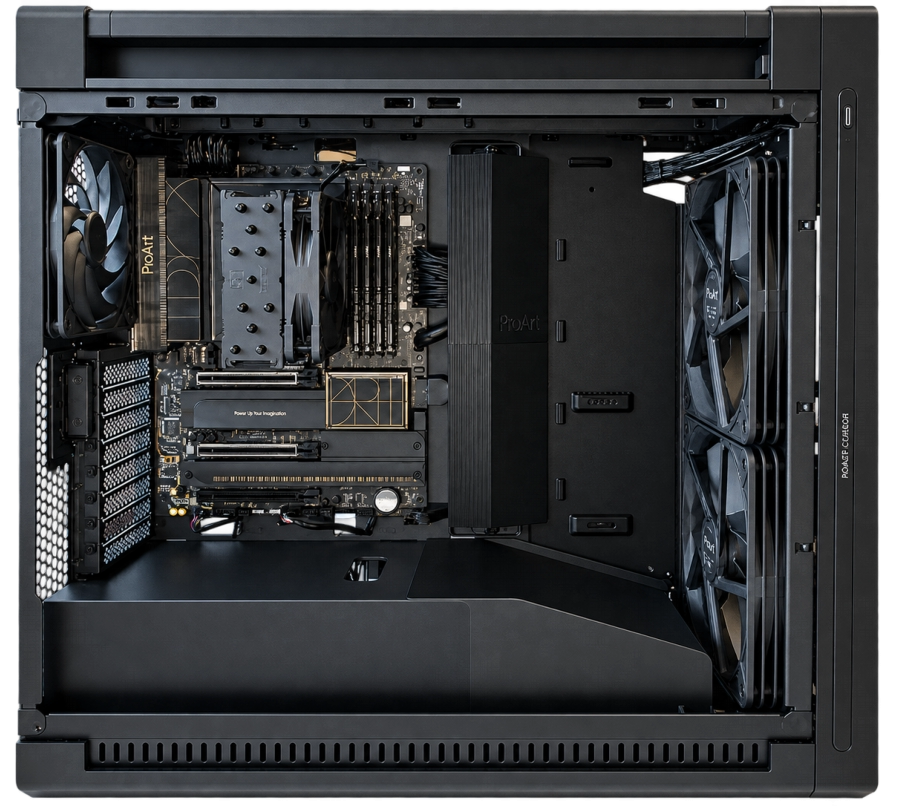
Develop a high-performance server platform tailored to industrial
automation workloads.
Approach
A customisable architecture was developed in two lines — standard and
high-performance — with an emphasis on flexibility, computing performance, high-throughput
networking, redundancy, low acoustic output, and substantially reduced capital cost.
Outcome
•
The standard line delivers approximately twice the computing performance of a conventional enterprise server.
o
Achieved at roughly half the capital cost.
o
The high-performance line approximately doubles that performance again.
•
High-speed storage.
o
Data-copy speeds of approximately 3 GB/s are typical on the standard line.
•
High-speed networking.
o
100 Gbps is typical on the standard line.
o
Allows large sections of the virtual infrastructure to be migrated between servers with
minimal disruption.
•
Multiple GPU support.
o
Enables specialised high-performance virtual machines.
•
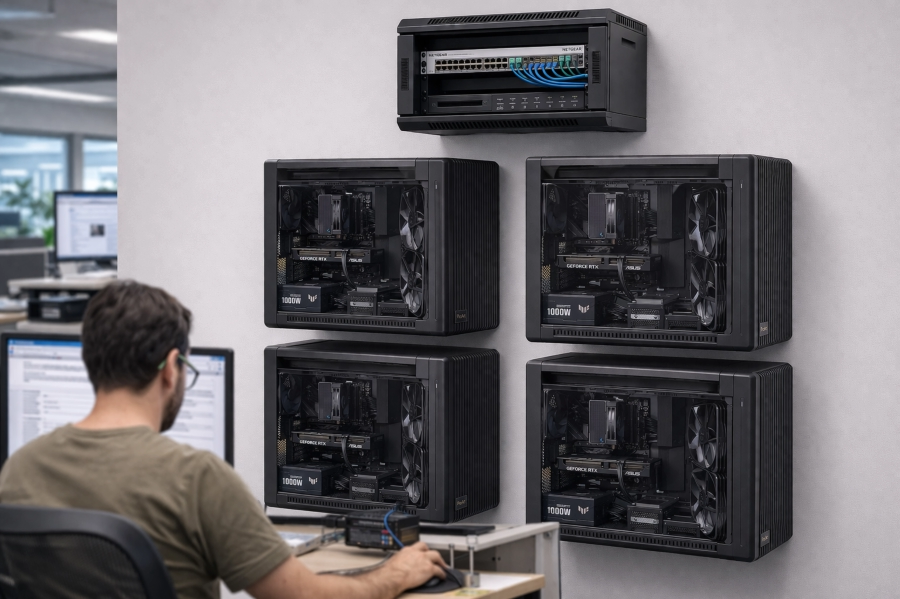
Designed for redundant two-server deployment.
o
System resilience is transferred from individual components to the machine level.
•
Physical design optimised for very low acoustic output compared with conventional enterprise servers.
o
Allows the servers to be installed in an easily accessible location, within arm's reach of the system
administrator.
APPLICATION-SPECIFIC WINDOWS PLATFORM
Objective
Develop a lightweight, controllable Windows platform in Workstation and Server editions, tailored
to dedicated industrial applications.
Approach
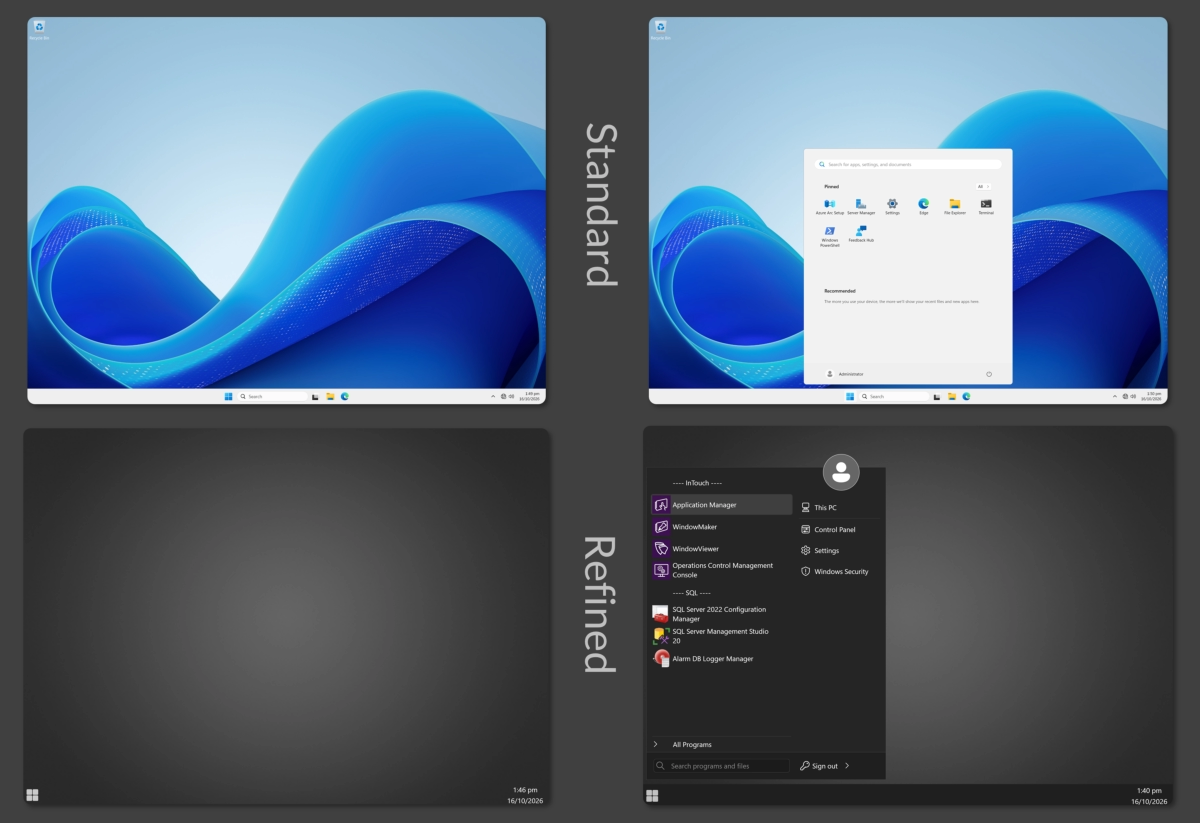
A common optimisation methodology was applied to both editions. Each operating system was
extensively refined to retain only the functionality required for its intended role and
target application. Unnecessary services, data collection, cloud integration and autonomous
behaviour were removed or disabled, while the user interface was rebuilt around the intended task.
Outcome
•
Two purpose-specific operating system editions.
o
Workstation edition developed for engineering and operator workstations.
o
Server edition developed for virtualised and server-side workloads.
•
Substantially reduced operating-system footprint and background activity.
o
Telemetry, advertising, consumer features, cloud services and other non-essential functionality
removed or disabled.
•
Fixed and predictable system state.
o
Windows Update fully disabled to prevent uncontrolled changes after deployment.
•
Purpose-built user interface.
o
Exposes only the applications and system resources relevant to the machine's function.
•
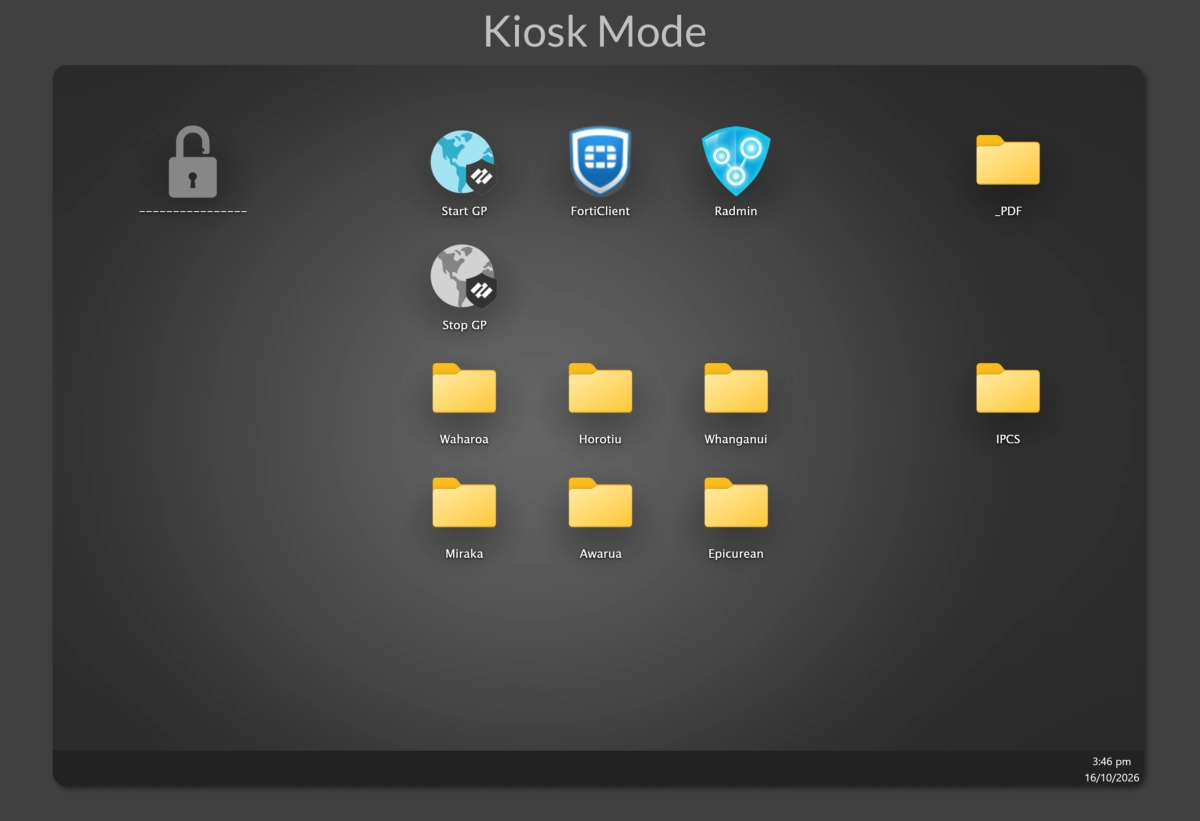
Optional kiosk mode.
o
Restricts the user environment to a predefined set of applications and resources when required.
•
Multi-target deployment platform.
o
The system can be tailored to a particular application, then cloned and deployed across multiple
target machines.
•
Self-healing
o
The system continuously checks critical components and applies corrective actions as required.

INDUSTRIAL COMPUTING ARCHITECTURE
Objective
Modernise and standardise the industrial computing infrastructure across multiple continuously
operating industrial sites without interrupting production, while improving performance, resilience,
recoverability and administrative control.
Approach
•
Replaced the existing VMware ESXi infrastructure with the custom Hyper-V platform
developed as part of the preceding project (see Custom Virtualisation Platform above).
o
Existing virtual machines were rebuilt on current Windows Server versions rather
than simply migrated.
o
The optimised Windows Server configuration derived from the preceding project
(see Application-Specific Windows Platform) was used as the basis for the new VM
environment.
•
Recreated the industrial application environment.
o
Systems included InTouch development and runtime environments, Historian,
Ignition, Control Expert suite, Rockwell suite, Microsoft SQL Server and supporting
services, and other specialised applications.
o
VM connectivity was defined according to function, with selected machines
operating as jump hosts and others restricted to the network segments they
required.
•
Designed the access architecture around the requirements of each site.
o
Domain-based administration was used where appropriate.
o
Where tighter lateral segregation was required, machine-level authentication
provided administrative access only to explicitly authorised systems.
•
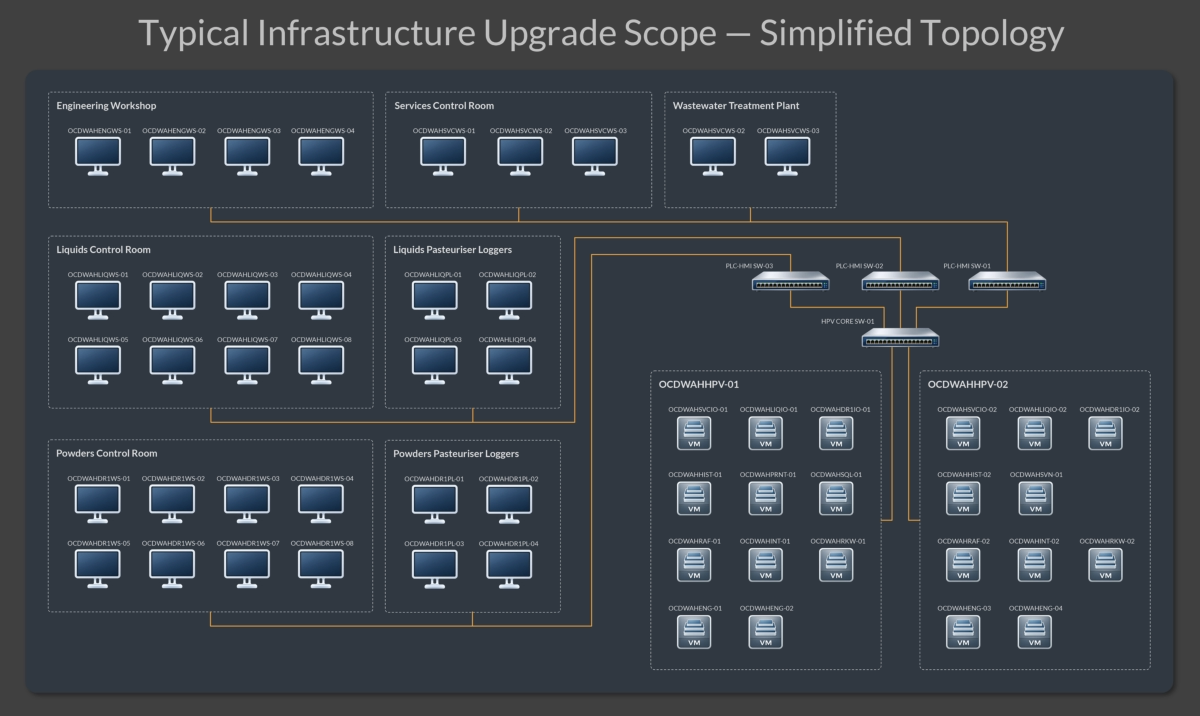
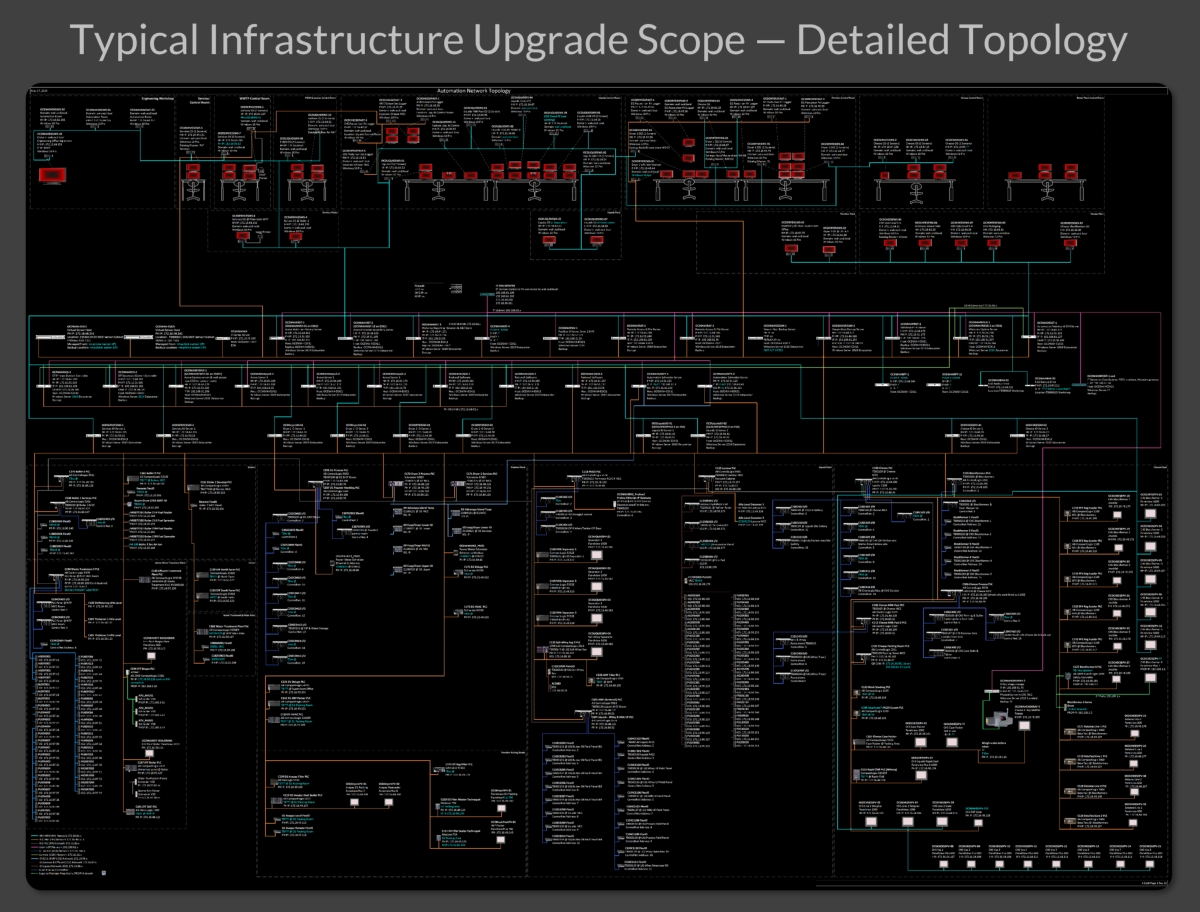
Redesigned the production network around calculated traffic requirements.
o
Hypervisors were interconnected through a 100 Gbit/s backbone for high-speed
replication and extraction of large datasets without interrupting production
workloads.
o
Physical 1 Gbit/s systems were grouped behind 10 Gbit/s switch uplinks.
o
Network segmentation was selected from estimated maximum data flows so that
production traffic could not create congestion.
•
Implemented a layered VM resilience strategy.
o
A known-good archived copy preserved the trusted application and
operating-system state.
o
A continuously maintained replica on the second hypervisor preserved the latest
operational data and machine state.
o
The trusted system state and current operational data could therefore be recovered
independently.
•
Implemented automated VM health monitoring and recovery.
o
Critical VMs were continuously checked for correct operation.
o
Failed systems were automatically restarted.
o
If recovery was unsuccessful, the replica was automatically started on the alternate
hypervisor.
o
Administrator notification provided the final escalation stage.
•
Established the supporting infrastructure required for autonomous operation.
o
Centralised time synchronisation, printing, SMTP and other common services were
incorporated into the architecture.
•
Rebuilt and standardised engineering and operator workstations using the
Windows-based platform developed as part of the preceding project (see
Application-Specific Windows Platform above).
o
Startup actions, time synchronisation, application launching and self-healing tasks
were automated.
o
Operator machines therefore returned directly to their required operating
environment after startup or recovery.
•
Implemented non-disruptive remote administration of operator workstations.
o
Administrators could either view the operator's active desktop as seen by the operator
or open a separate administrative session without interrupting production operation.
o
This enabled licensing, printer configuration, diagnostics and maintenance to be
performed while the operator continued working.
•
Protected workstation availability through complete binary system images and scheduled
network backups of changing operational data.
o
A failed workstation could be replaced by an identical unit and restored from its
known-good image within minutes while preserving the required software licensing.
Outcome
•
A repeatable industrial computing architecture was deployed across three production
sites while maintaining uninterrupted production throughout the upgrades.
•
The virtualisation, operating-system, networking and workstation layers were integrated
into a single coordinated platform rather than treated as independent systems.
•
System resilience was substantially improved.
o
Known-good baselines protected the trusted system state.
o
Replication protected current operational data.
o
Automated monitoring, restart and failover reduced dependence on immediate
administrator intervention.
•
Network capacity was deliberately engineered to provide predictable performance.
o
Segmentation and calculated uplink capacity prevented individual groups of
machines from adversely affecting the wider production network.
•
Operator systems became largely self-managing.
o
Startup, recovery, synchronisation and application initialisation required little or no
operator intervention.
•
Operator workstation maintenance became non-disruptive to active operator sessions.
o
Separate administrative sessions allowed corrective work to take place without
taking control of the operator's active environment.
•
Recovery of both virtual and physical systems was transformed from a complete rebuild
into a controlled restoration procedure measured in minutes rather than hours or days.